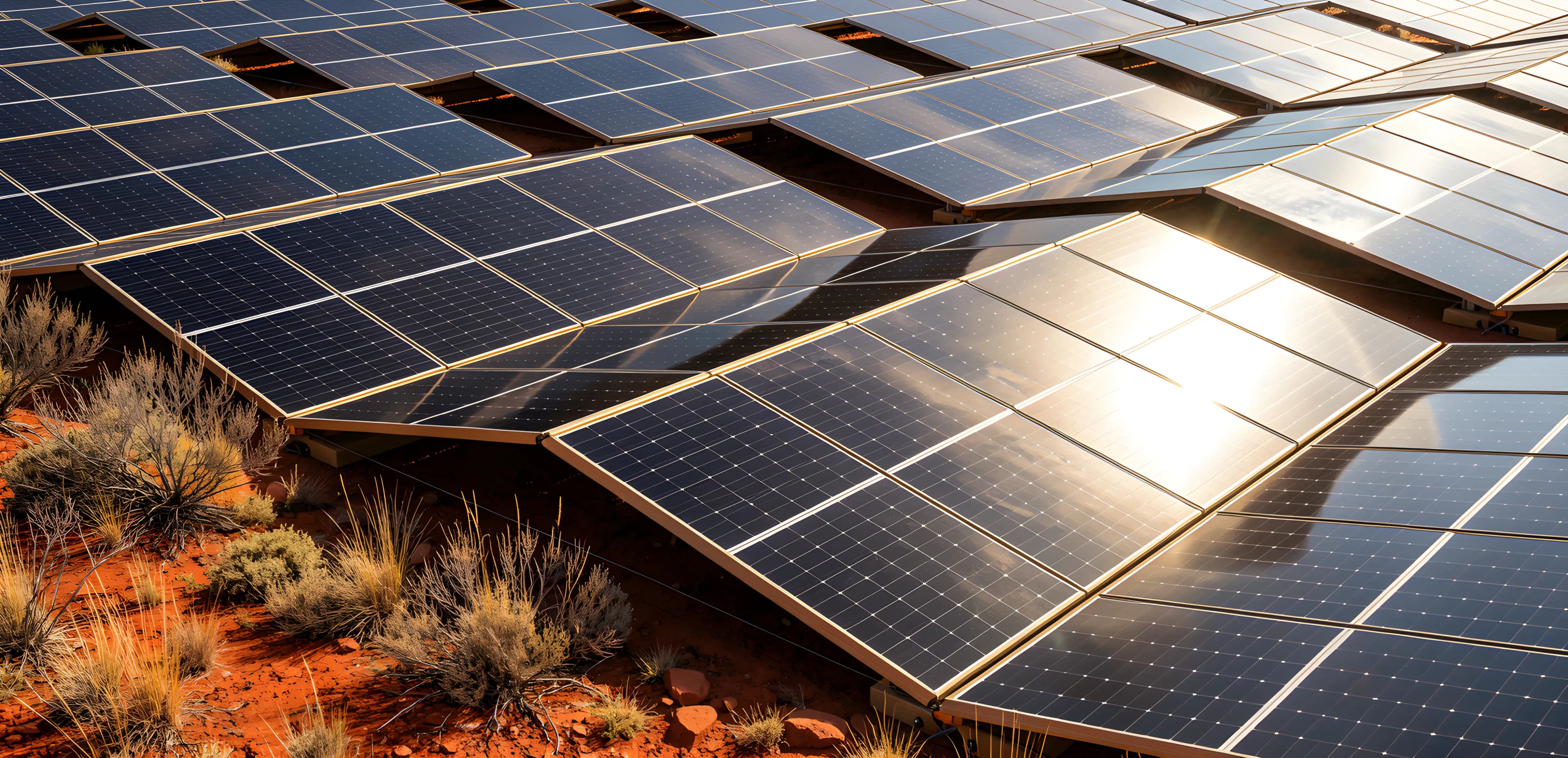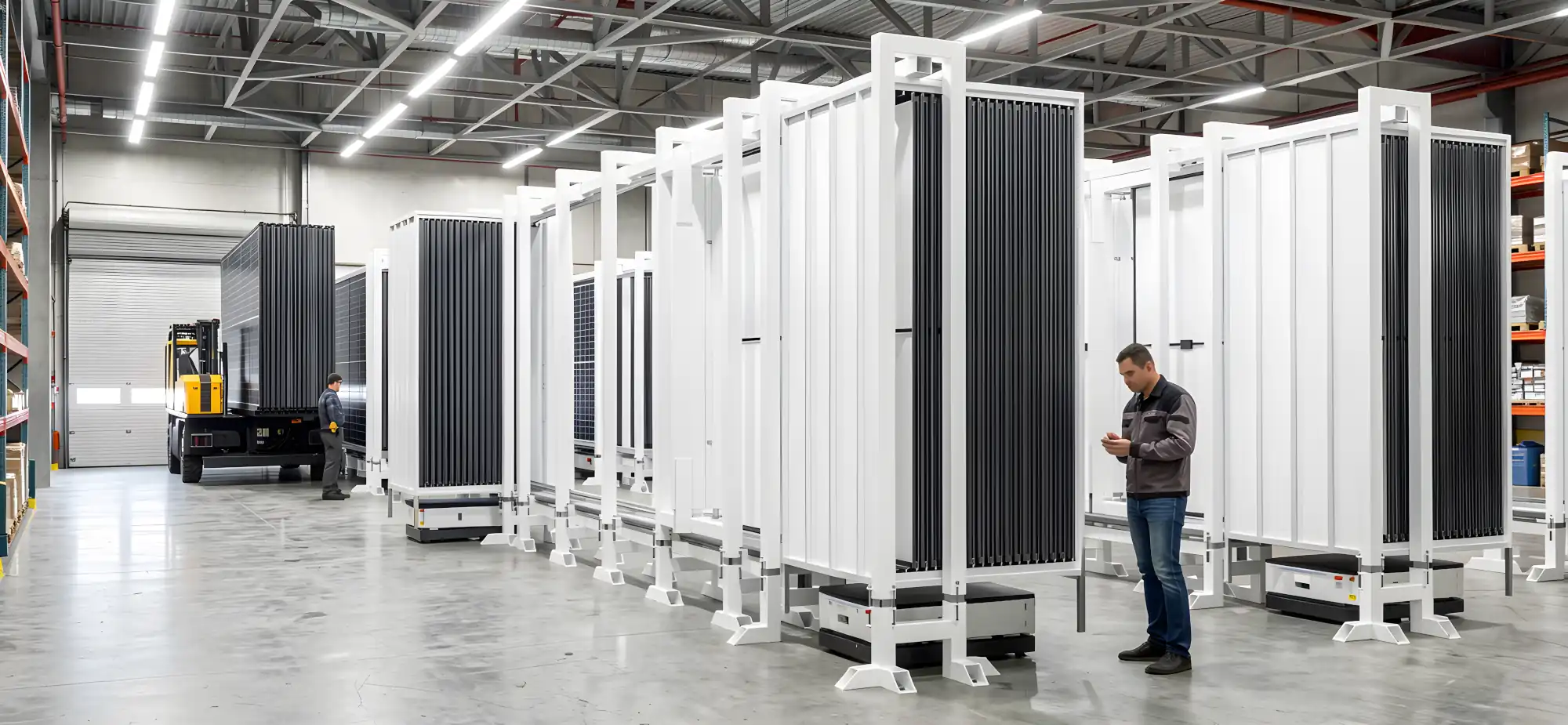

Solar power, designed for factory assembly.
SOLAR WAVES focuses on the parts of utility-scale solar deployment that still create friction in the field: structure, wiring, logistics, assembly, access, and maintenance. Instead of treating each site as a new construction project, SOLAR WAVES uses MegaWAVE — a repeatable 50 kW appliance designed for factory pre-assembly, controlled production, and faster site deployment. The result is a utility-scale solar rollout model where more work happens in a manufacturing environment and less work is left to be solved on site.
Manufactured as a complete solar appliance.
The MegaWAVE integrates structure, panel layout, cable paths, transport geometry, and deployment motion into one factory-assembled SOLAR WAVES appliance. It is designed to be produced consistently, shipped compactly, and installed with fewer field operations.
The core structure and power surface are assembled before the appliance reaches the site.
Cable paths and electrical interfaces are integrated into the appliance design.
Aluminium extrusions and repeatable assembly steps support scalable factory production.
Assembly and wiring can be checked in a controlled environment before delivery.
MegaWAVE is sized around standard transport logistics for a simpler factory-to-site chain.
Recycled aluminium supports lightweight construction, corrosion resistance, and lower embodied carbon.
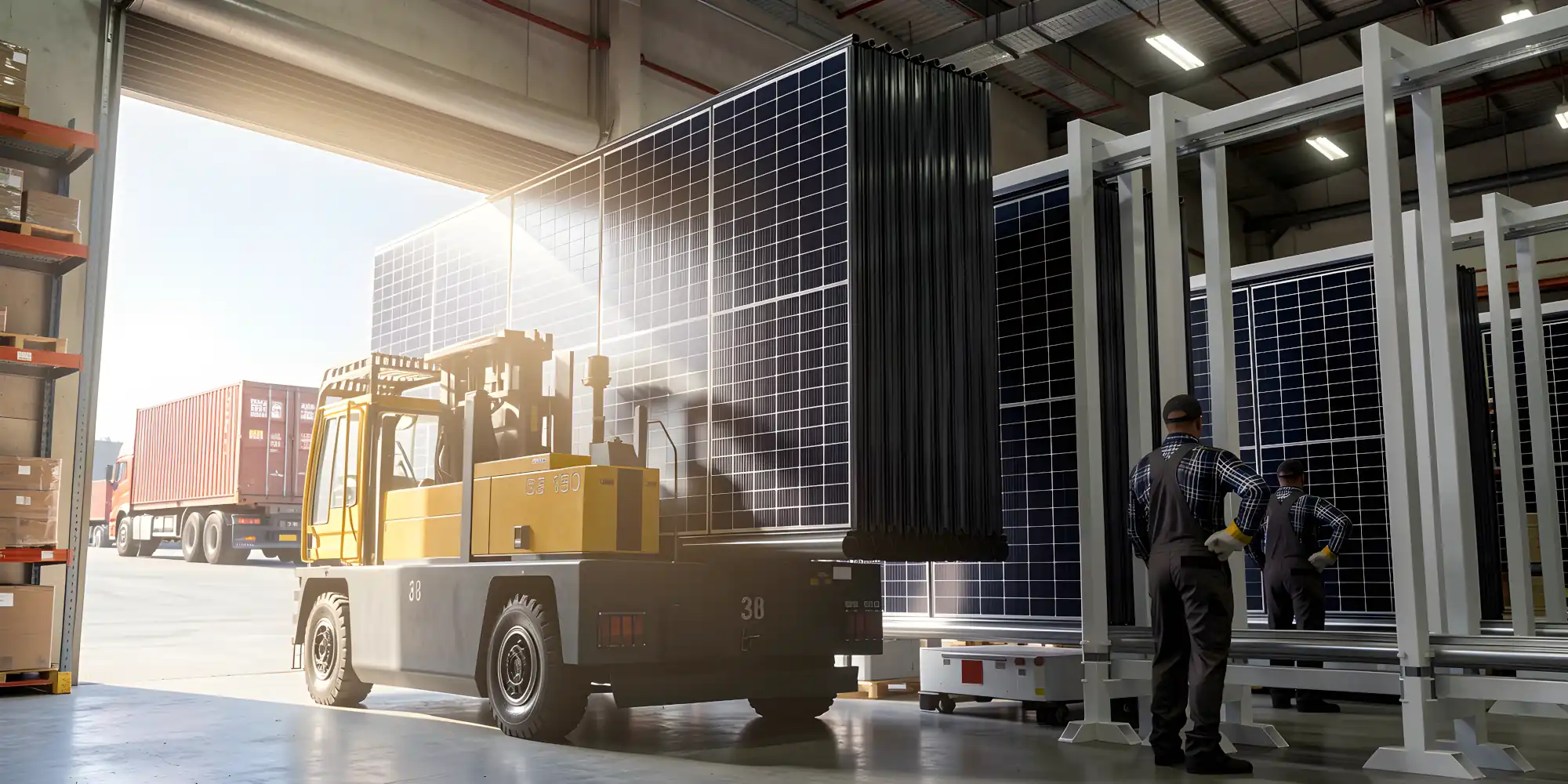
Rapid deployment starts before the site.
SOLAR WAVES reduces field work by moving assembly, wiring, and quality control into the factory. Once on site, the work is focused on positioning the MegaWAVE, connecting it to the selected support system, and completing electrical connection and commissioning — not building the solar architecture from thousands of loose parts. For utility-scale rollouts, this supports shorter site programmes, more predictable deployment sequences, and a clearer path from logistics planning to generation.
- 01
Delivered
Factory-assembled, pre-wired, and prepared for transport.
- 02
Positioned
Set onto the support system selected for the site.
- 03
Unfolded
The wave structure opens into its full generating span.
- 04
Connected
Electrical connection and commissioning complete the deployment.
One MegaWAVE, multiple support systems.
The MegaWAVE stays repeatable. The support system adapts to the deployment environment. This is the core engineering logic behind SOLAR WAVES: standardise the solar appliance above, configure the support system below.
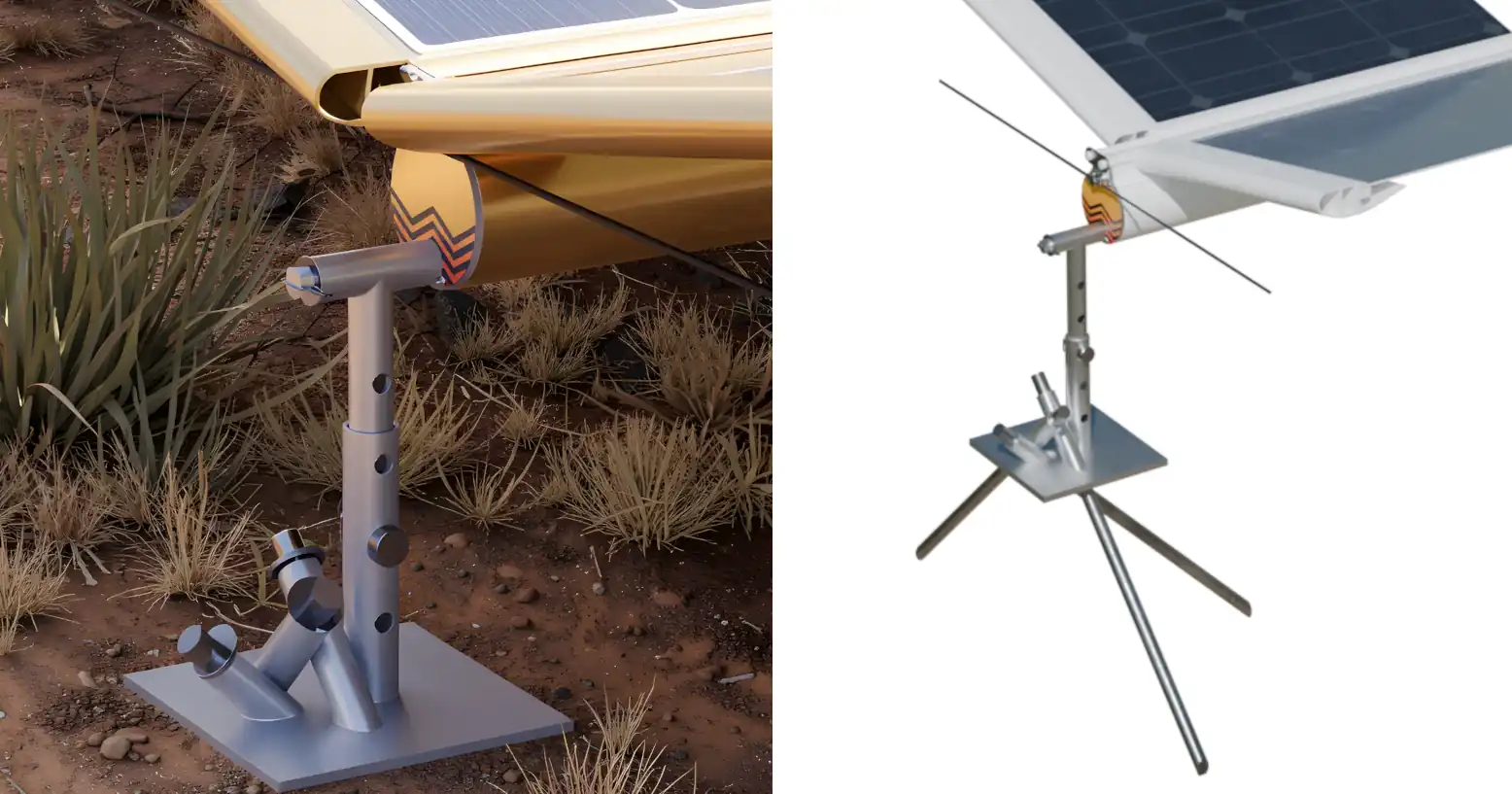
A reusable ground support system for fast utility-scale deployment on open land, designed to reduce civil works and simplify repeatable large-scale rollout.
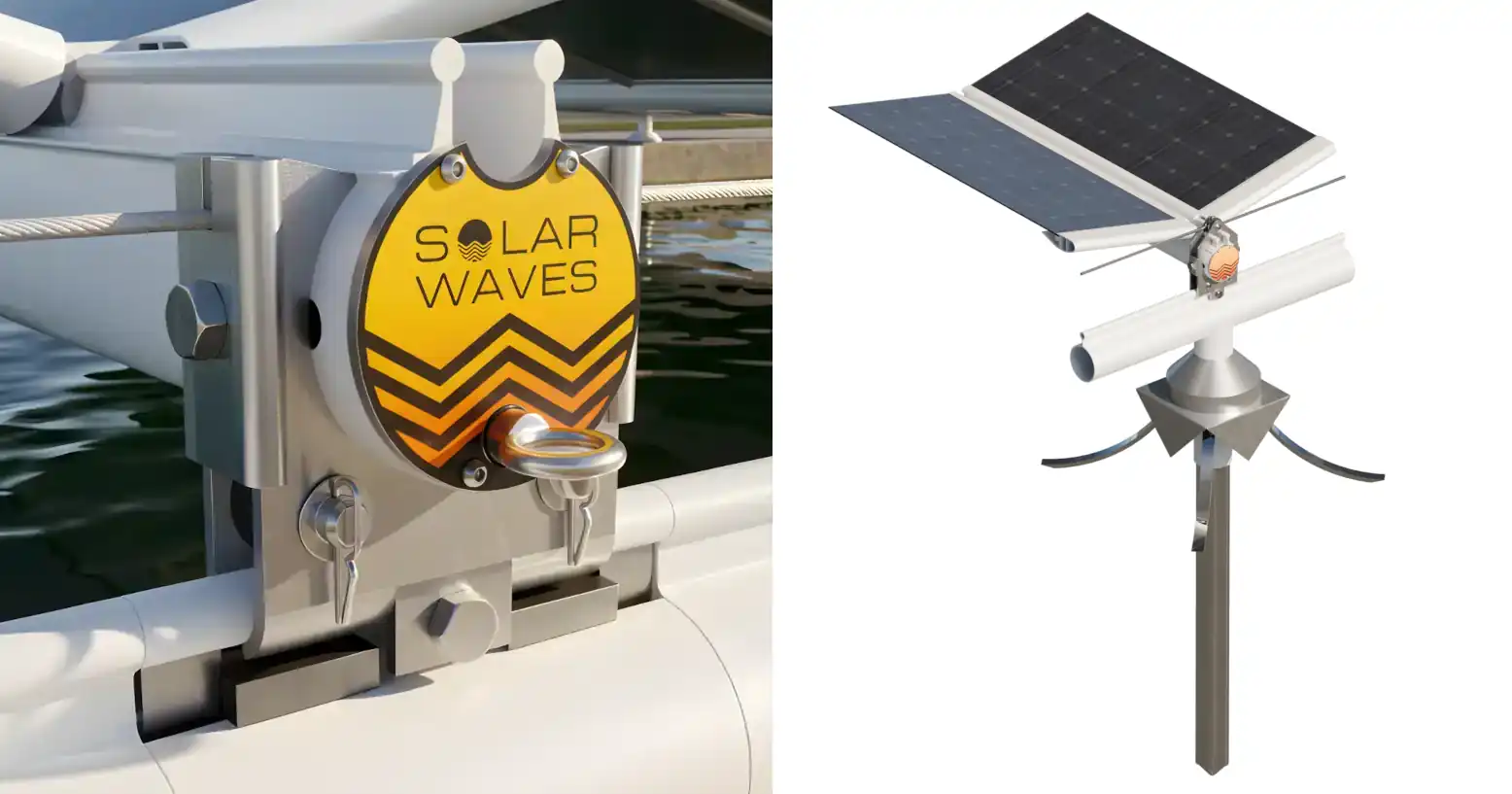
For irrigation canals where the MegaWAVE is positioned above the water while maintaining access for canal inspection, servicing, and water authority operations.
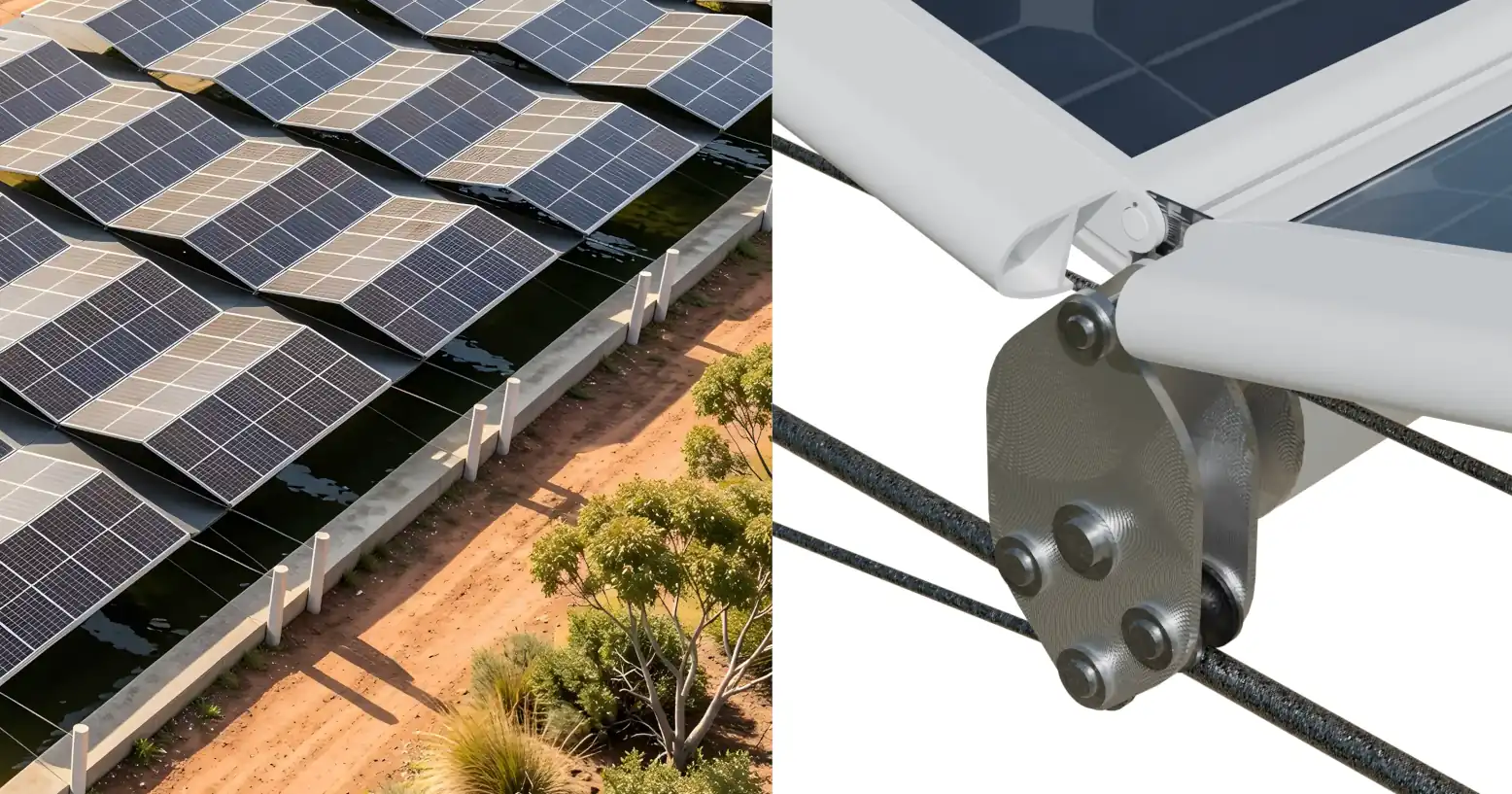
For wider canal spans where the MegaWAVE can be supported from cable-based structures, with access routes designed around inspection and maintenance needs.
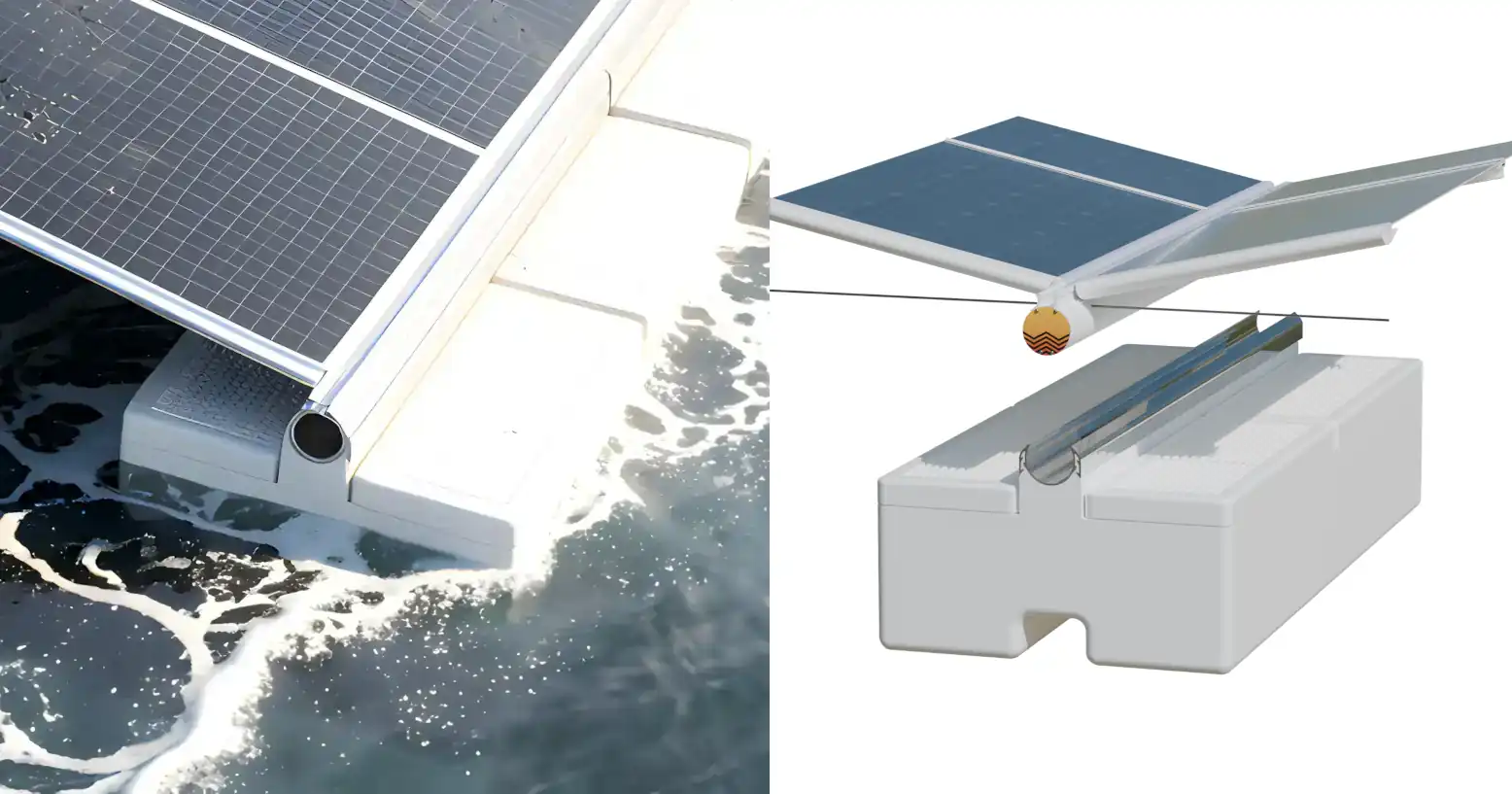
For deployment on reservoirs, ponds, and managed water bodies, where floating supports carry the MegaWAVE without requiring additional land.
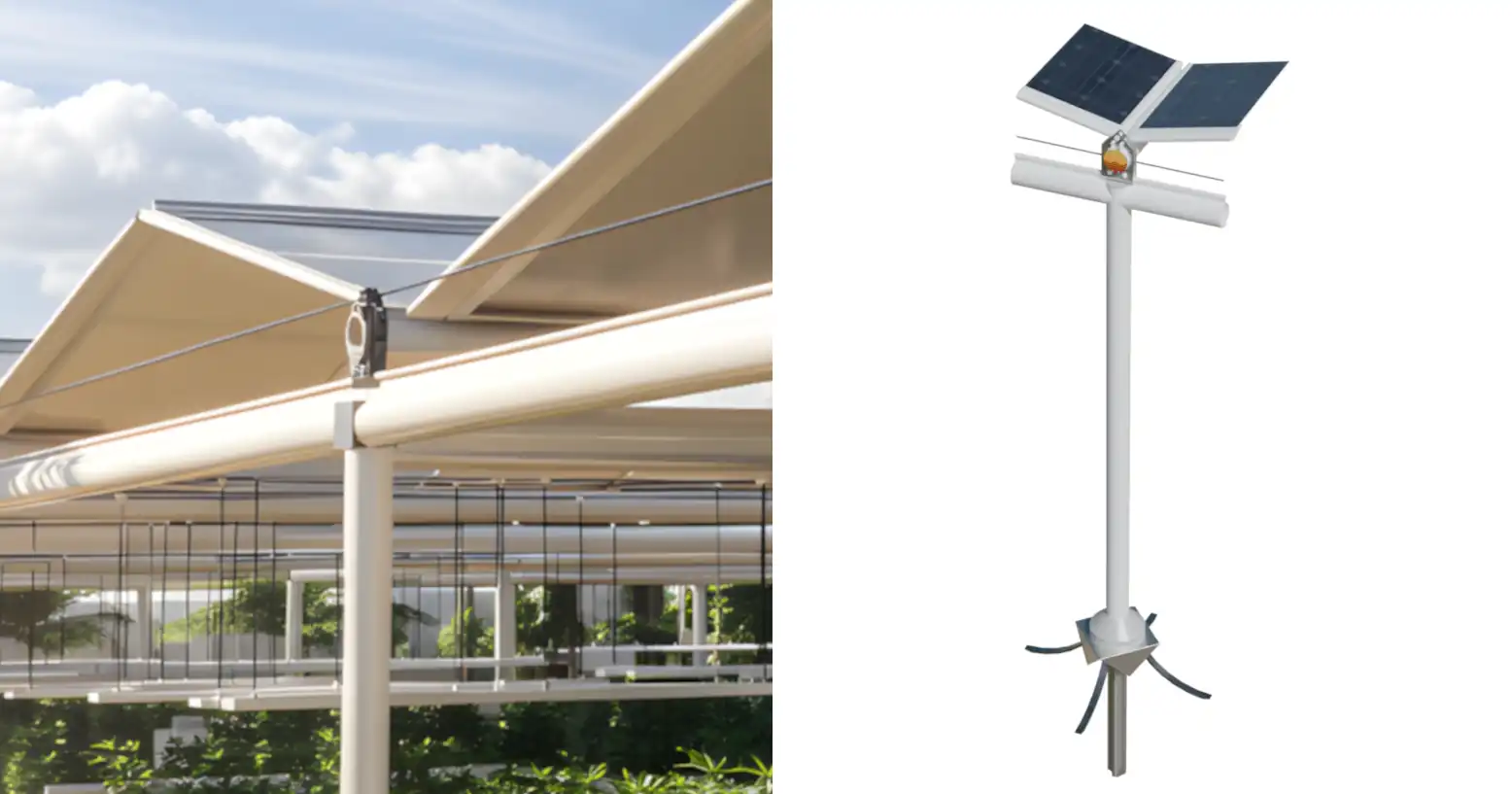
Lifts the MegaWAVE above productive land, allowing power generation, crops, grazing, shade, and rainwater collection to share the same footprint.
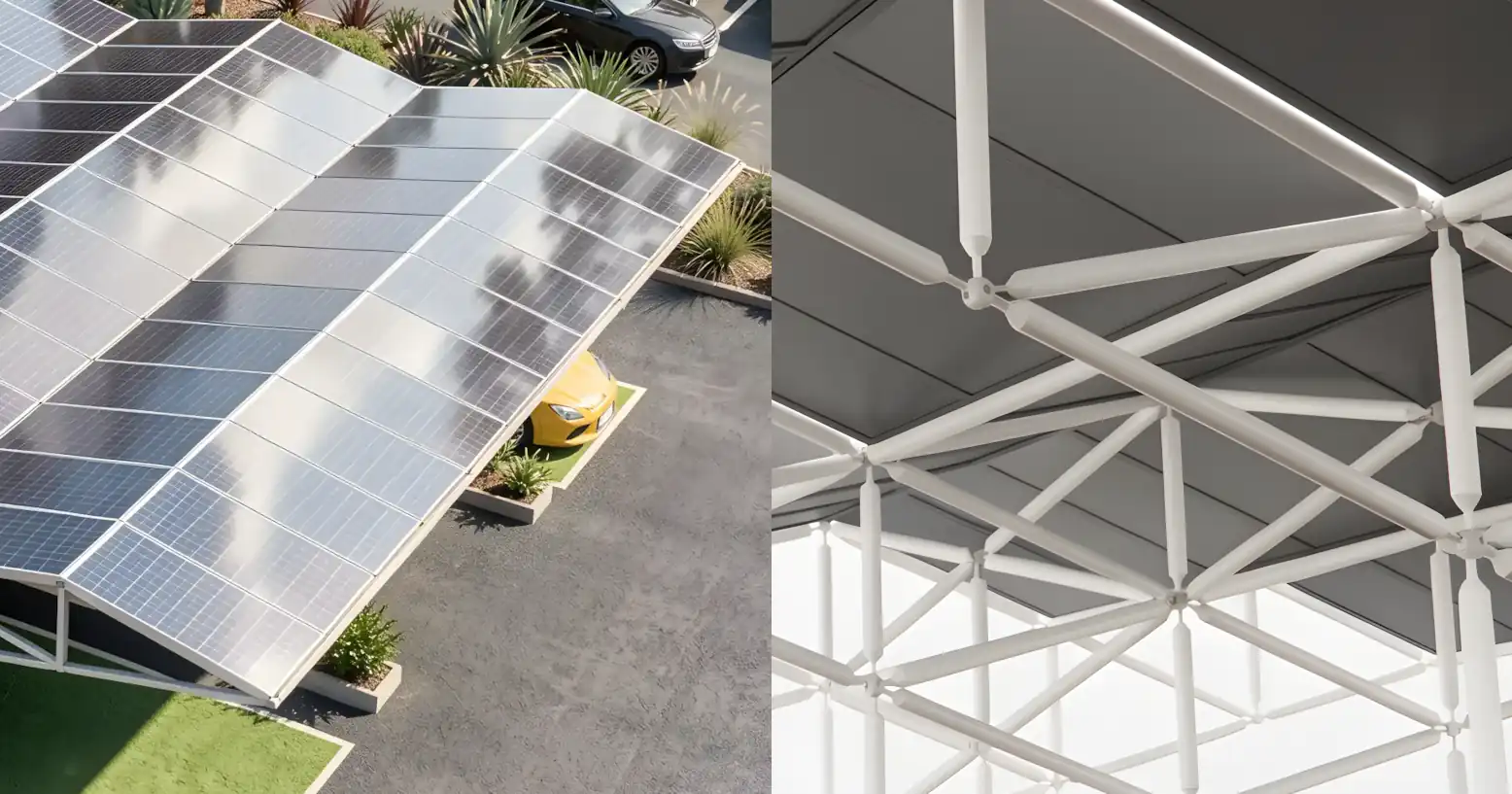
A canopy support framework for EV charging sites, designed to integrate MegaWAVE with chargers, electrical equipment, shelter, lighting, signage, and optional storage.
Engineered to reduce field complexity.
SOLAR WAVES is designed to reduce the number of separate parts, trades, and fixing operations required on site. Sliding aluminium extrusions, simplified mechanical interfaces, and integrated service access help make each MegaWAVE easier to assemble, inspect, transport, and maintain.
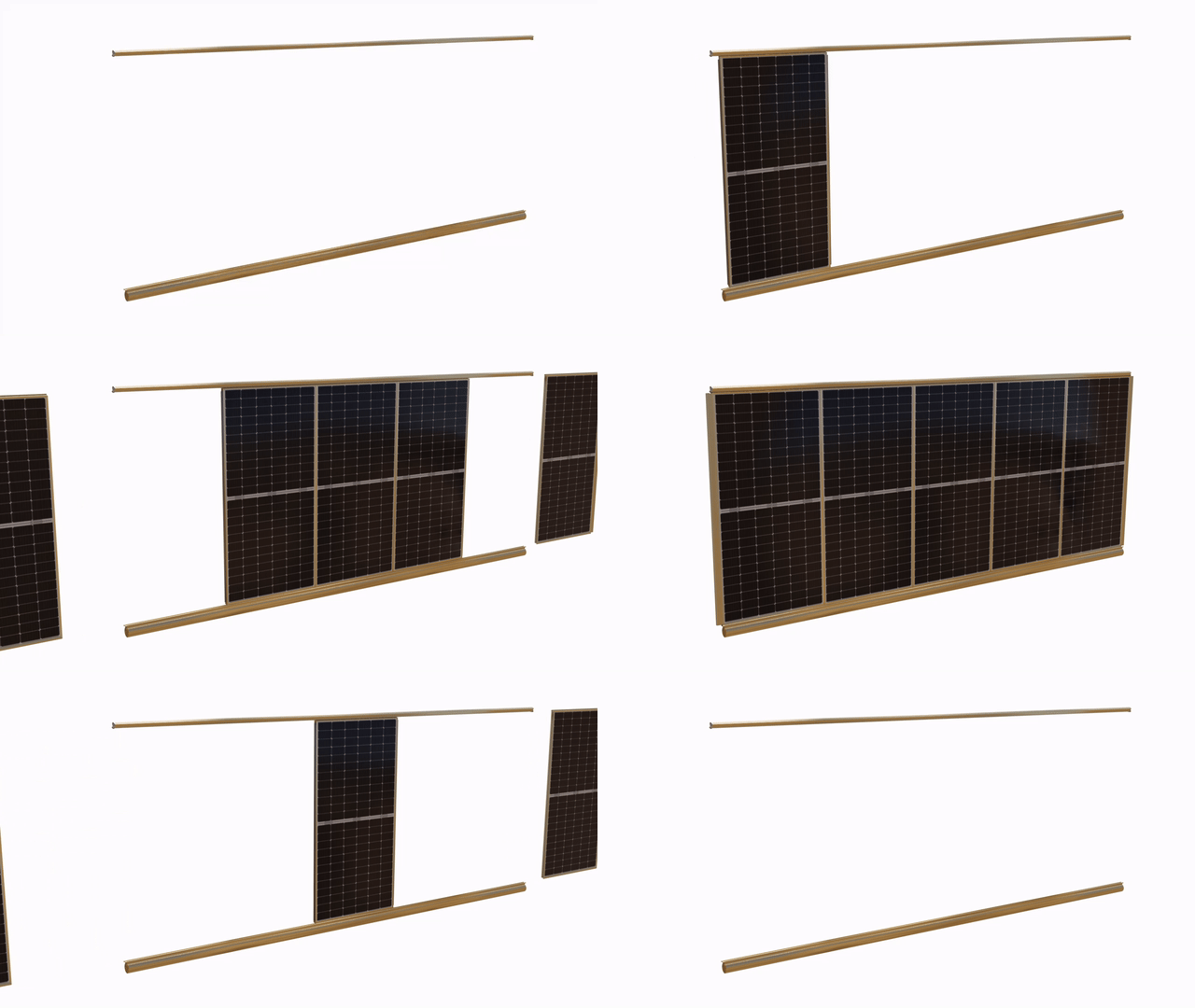
Mechanical interfaces are designed to reduce repetitive field fixing.
Fewer separate parts mean fewer handling, alignment, and installation steps.
The frame is engineered to resist strong winds and cyclones, with wind loading considered from the start rather than treated as an afterthought.
Inspection and maintenance routes are designed into the appliance architecture.
Designed for operation, not just installation.
Solar infrastructure has to perform for years after deployment. SOLAR WAVES is designed with durable aluminium, accessible service pathways, integrated cleaning, watertight surfaces, and optional battery storage to support long-term operation in real environments.
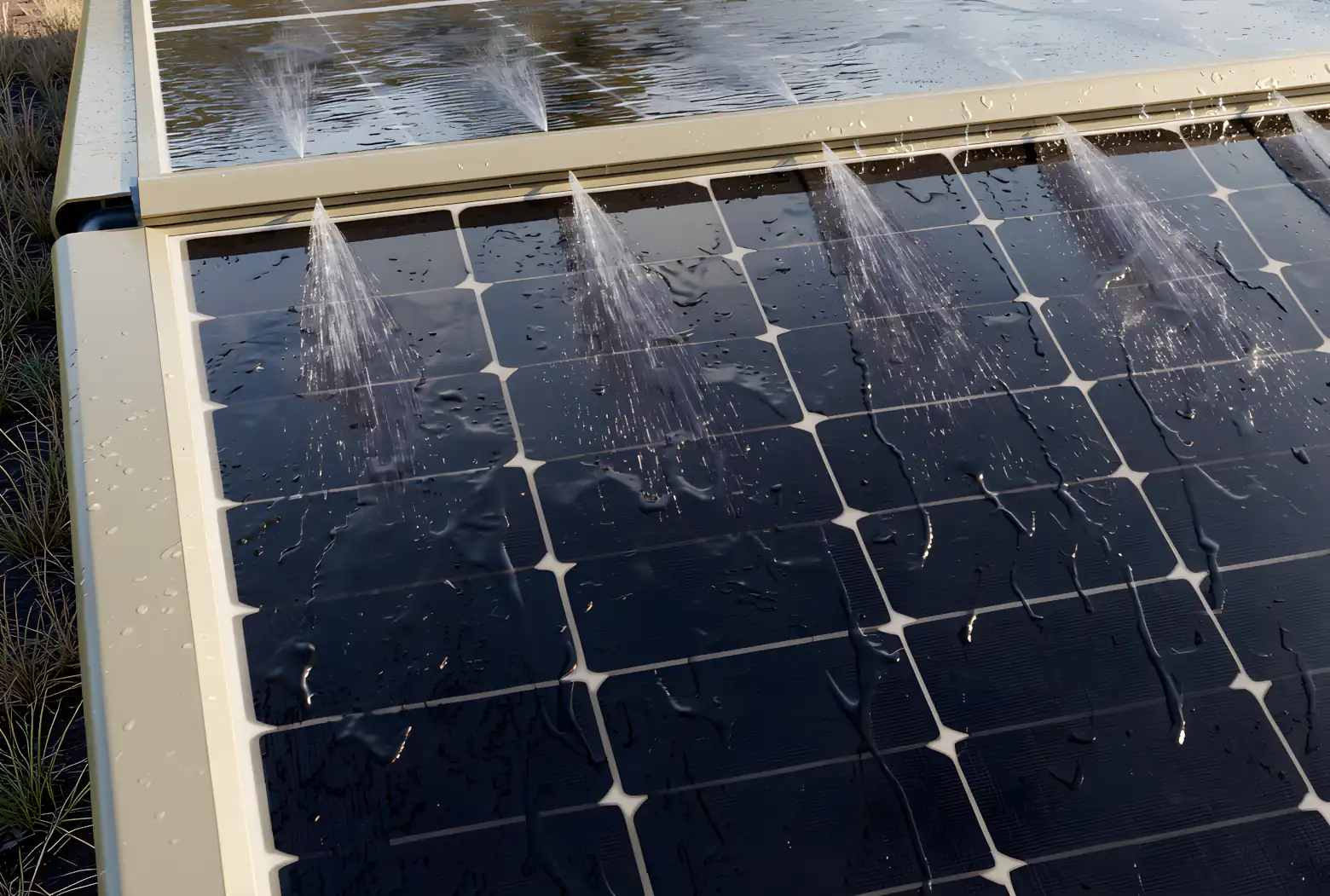
Integrated cleaning can reduce manual washdown requirements on remote, elevated, floating, or hard-to-access sites.
The MegaWAVE can form a protective roof surface, supporting shelter below and rainwater collection above.
Lightweight, corrosion-resistant aluminium supports repeatable manufacturing and long service life.
Maintenance pathways and simplified interfaces are built into the MegaWAVE design.