
Over Canals
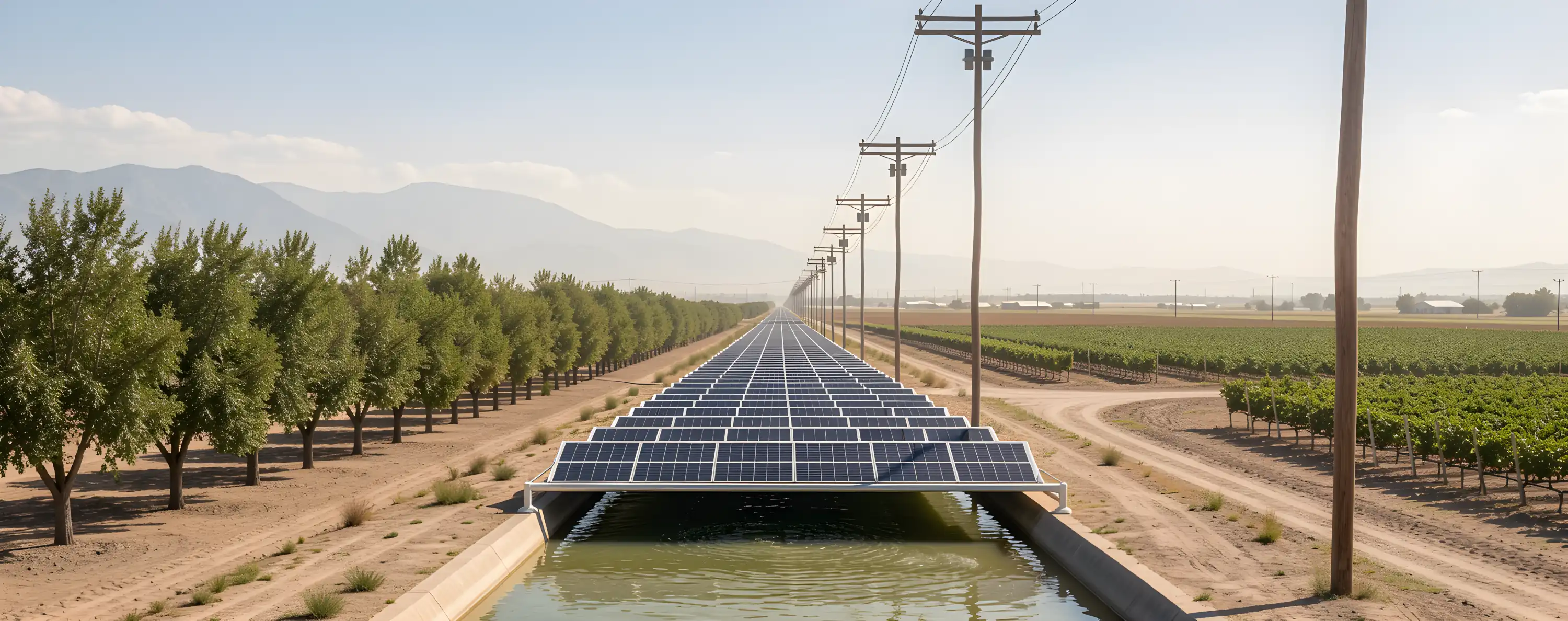
SOLAR WAVES turns canal corridors into dual-purpose energy infrastructure. Mounted above the water on rail-mounted or cable-supported systems, MegaWAVE generates clean power while helping reduce evaporation, preserve surrounding land, and maintain access for canal inspection and servicing.
Support systems designed around canal access.
Canals require solar systems that respect water operations, inspection, and maintenance. SOLAR WAVES adapts through rail-mounted or cable-suspended support systems while the MegaWAVE above remains standardised.
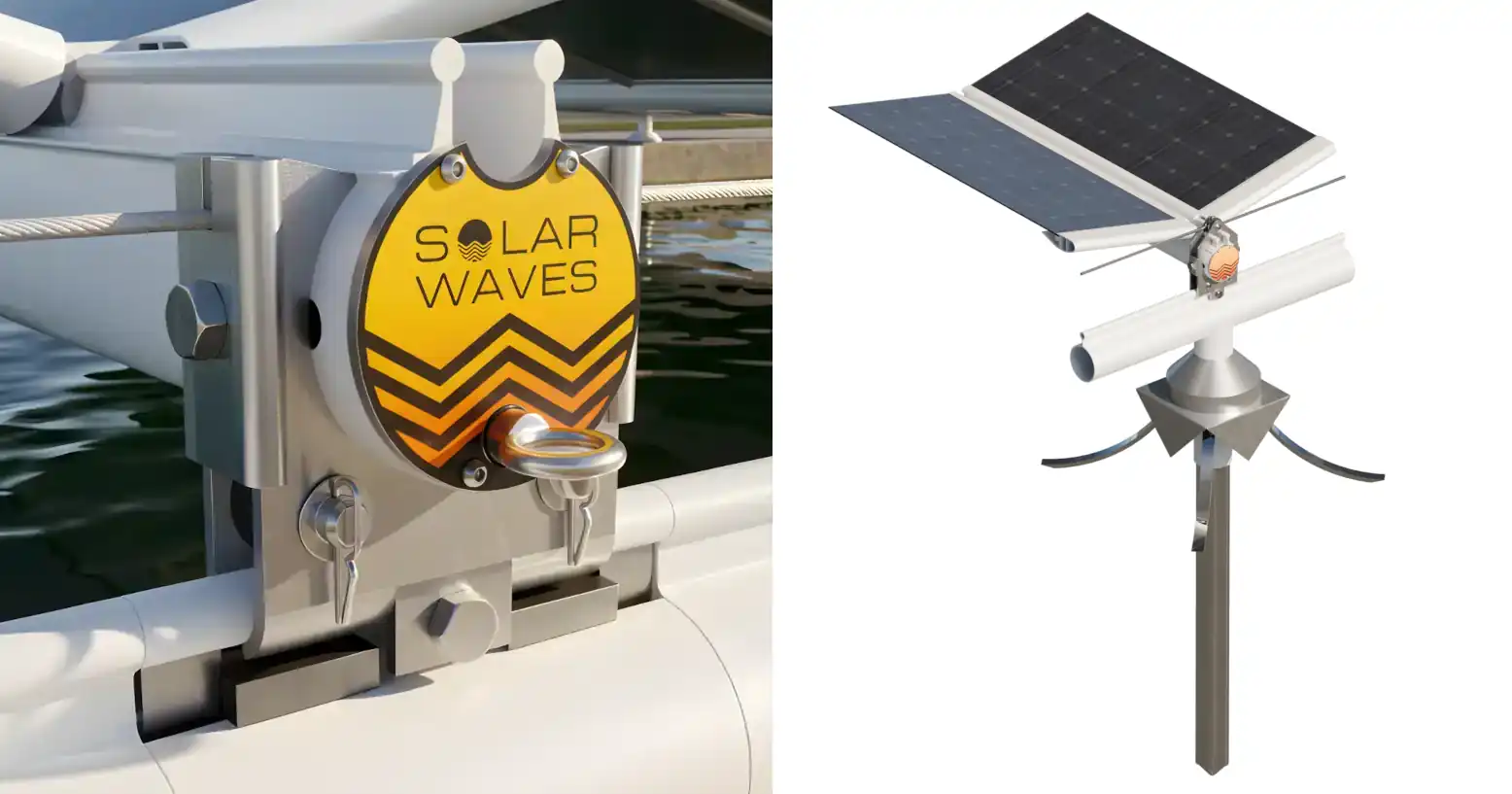
Rail support system
For narrower canals, the MegaWAVE mounts above the water on a rail support system. The array can fold back when canal access is required for inspection or maintenance.
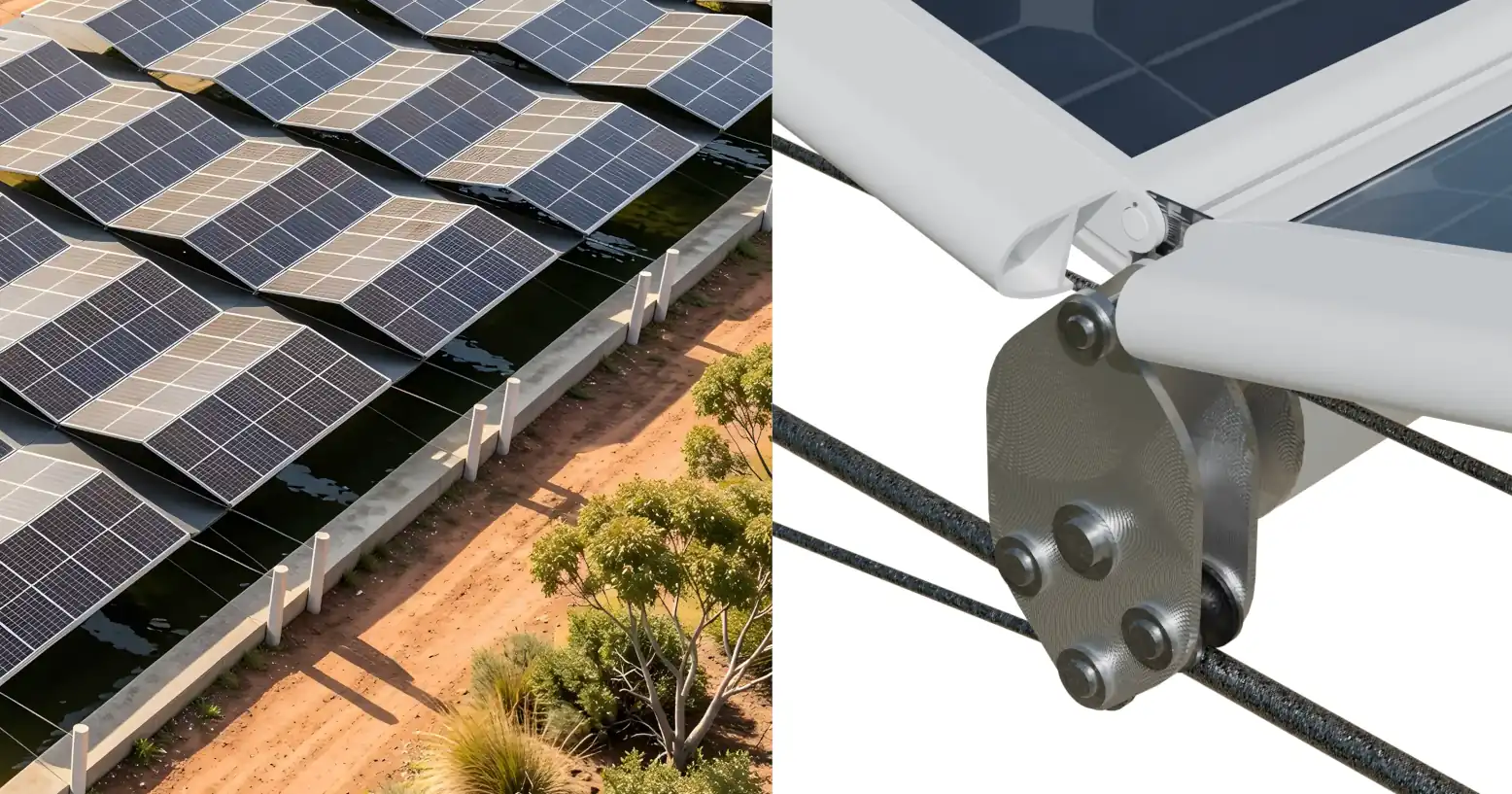
Cable-suspended system
For wider spans, the MegaWAVE can be suspended above the canal with integrated access paths, allowing power generation while maintaining operational access below.
Power from infrastructure you already manage.
Reduced evaporation
By shading the water surface, SOLAR WAVES can help reduce evaporation while producing power from the canal corridor.
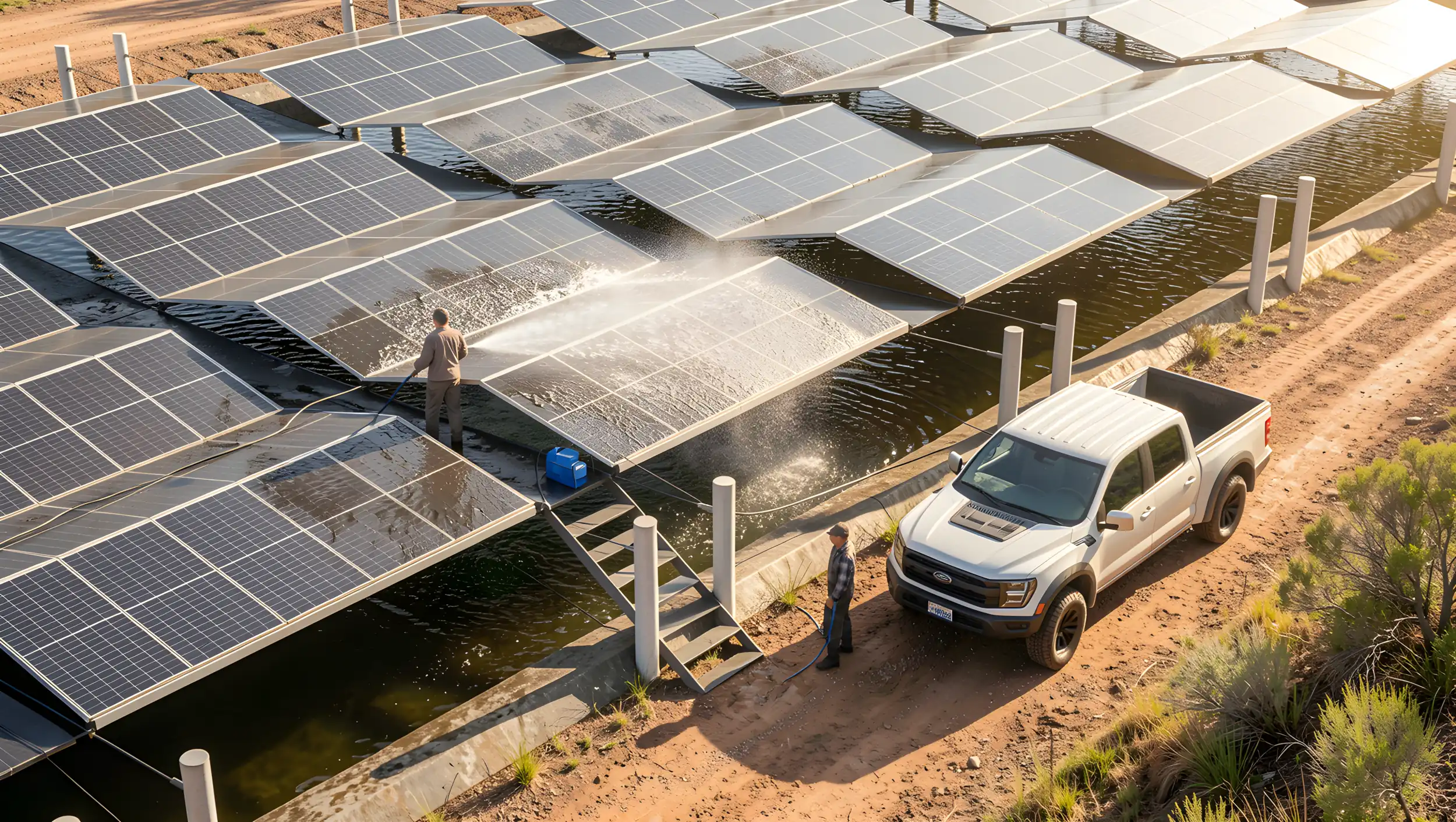
Service access built in
Fold-back access, walkways, and support-system design keep maintenance requirements part of the deployment from the start.
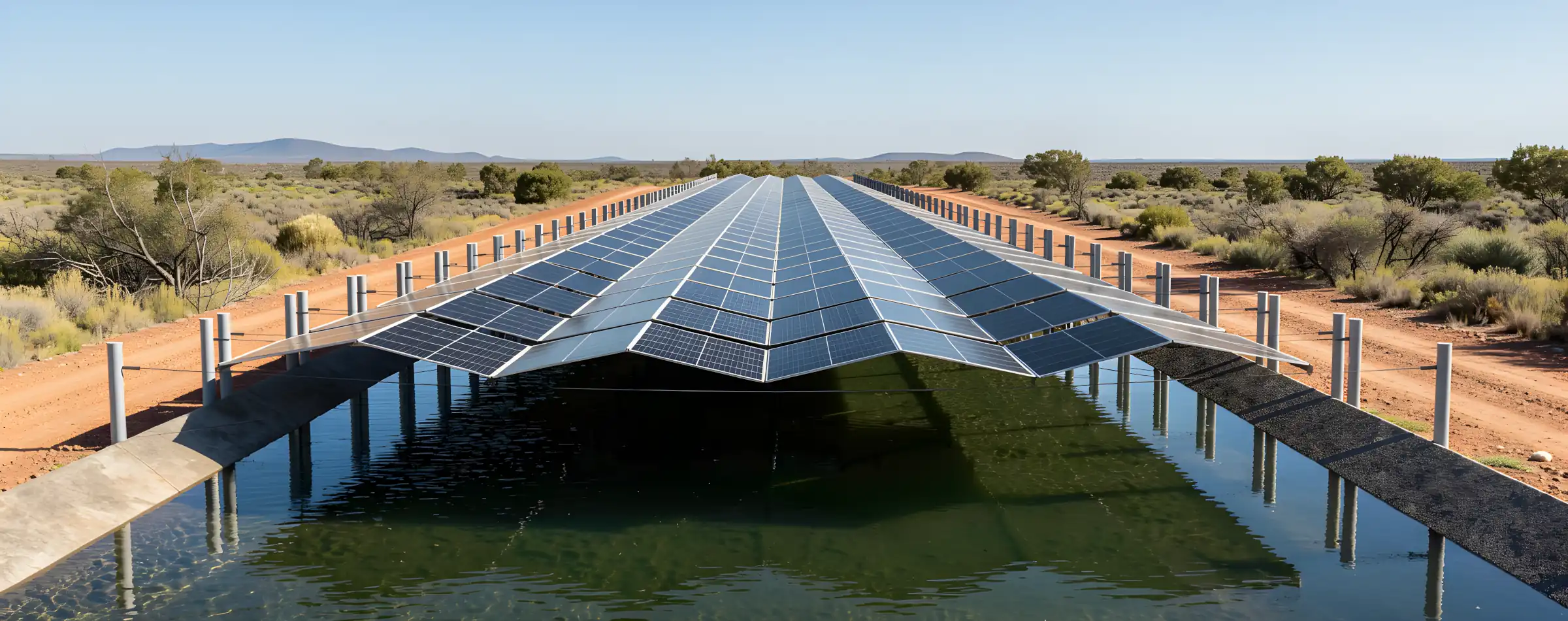
Power without land take
Canal corridors become productive energy corridors without removing farmland, habitat, or developable land from use.
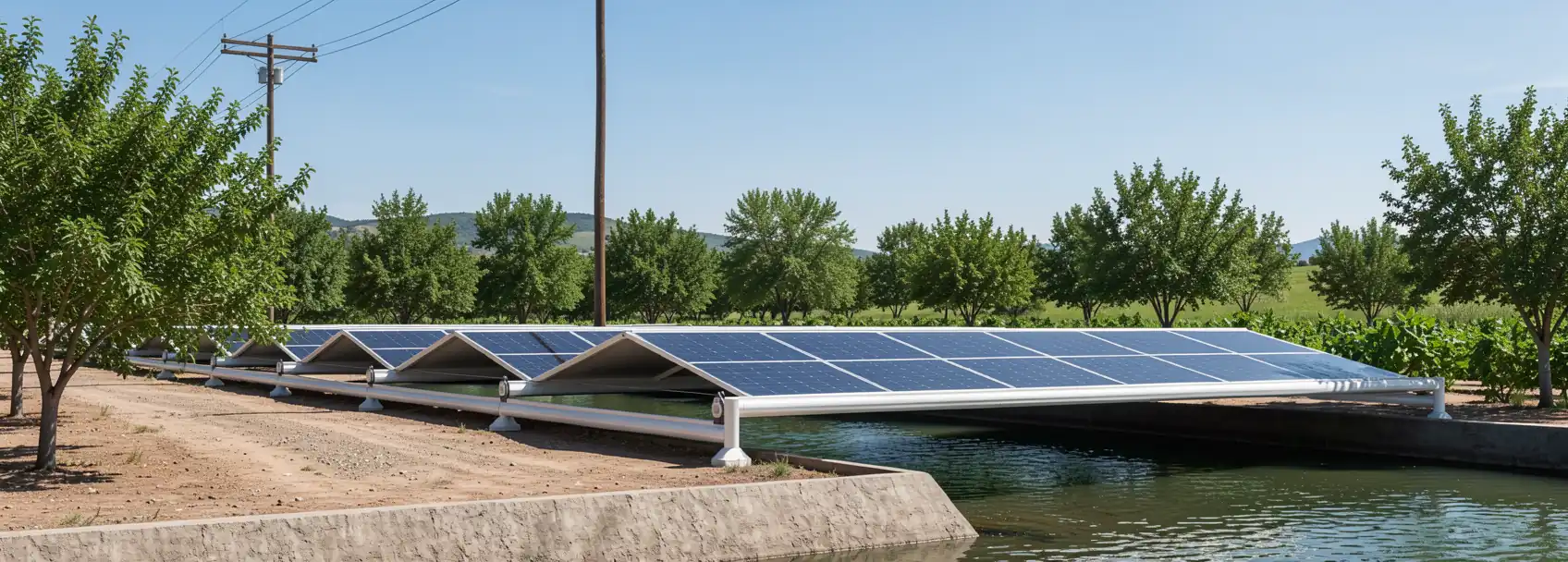
Built for canal operations
The support system is designed around access, inspection, and long-term water authority operations — not just panel placement.
The same MegaWAVE. The same repeatable deployment sequence.
Across deployment types, each MegaWAVE follows the same sequence: manufactured, delivered, positioned, unfolded, connected, and commissioned. This repeatable sequence supports utility-scale rollout planning across multiple sites and infrastructure types. The support system changes with the site. The MegaWAVE stays repeatable.
- 01
Delivered
Factory-assembled, pre-wired, and prepared for transport.
- 02
Positioned
Set onto the support system selected for the site.
- 03
Unfolded
The wave structure opens into its full generating span.
- 04
Connected
Electrical connection and commissioning complete the deployment.
Proven over the Turlock canals.
Over Canals is already running in the field. In Turlock, California, a 60 kW SOLAR WAVES array spans a 6.5-metre canal — saving around 560,000 litres of water a year while generating clean power.
Watch the deployment, then explore the full pilot on the Projects page.
The same MegaWAVE, a different support system.
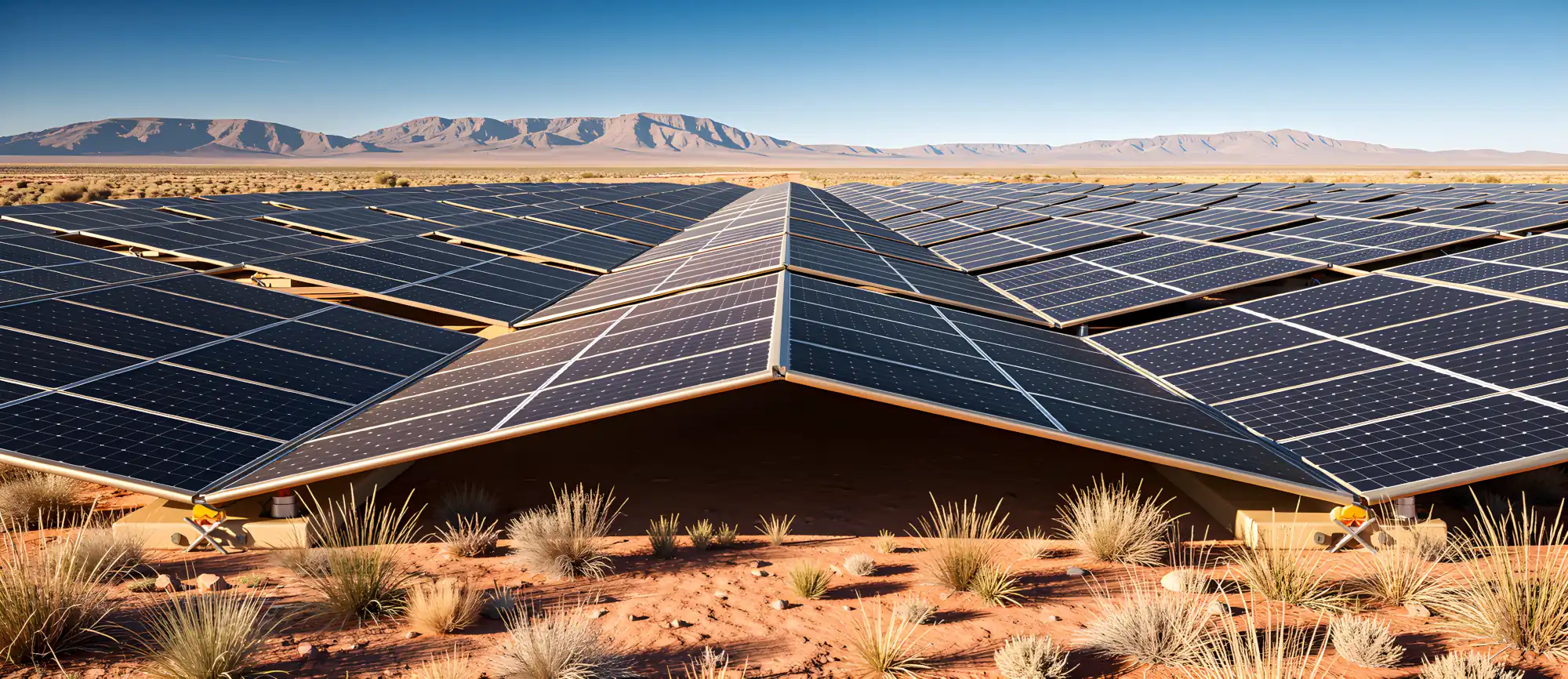
On Ground
Open land can become utility-scale solar generation faster, with less civil work and less permanent site impact. MegaWAVE folds out onto a reusable ground support system designed for repeatable large-scale deployment.
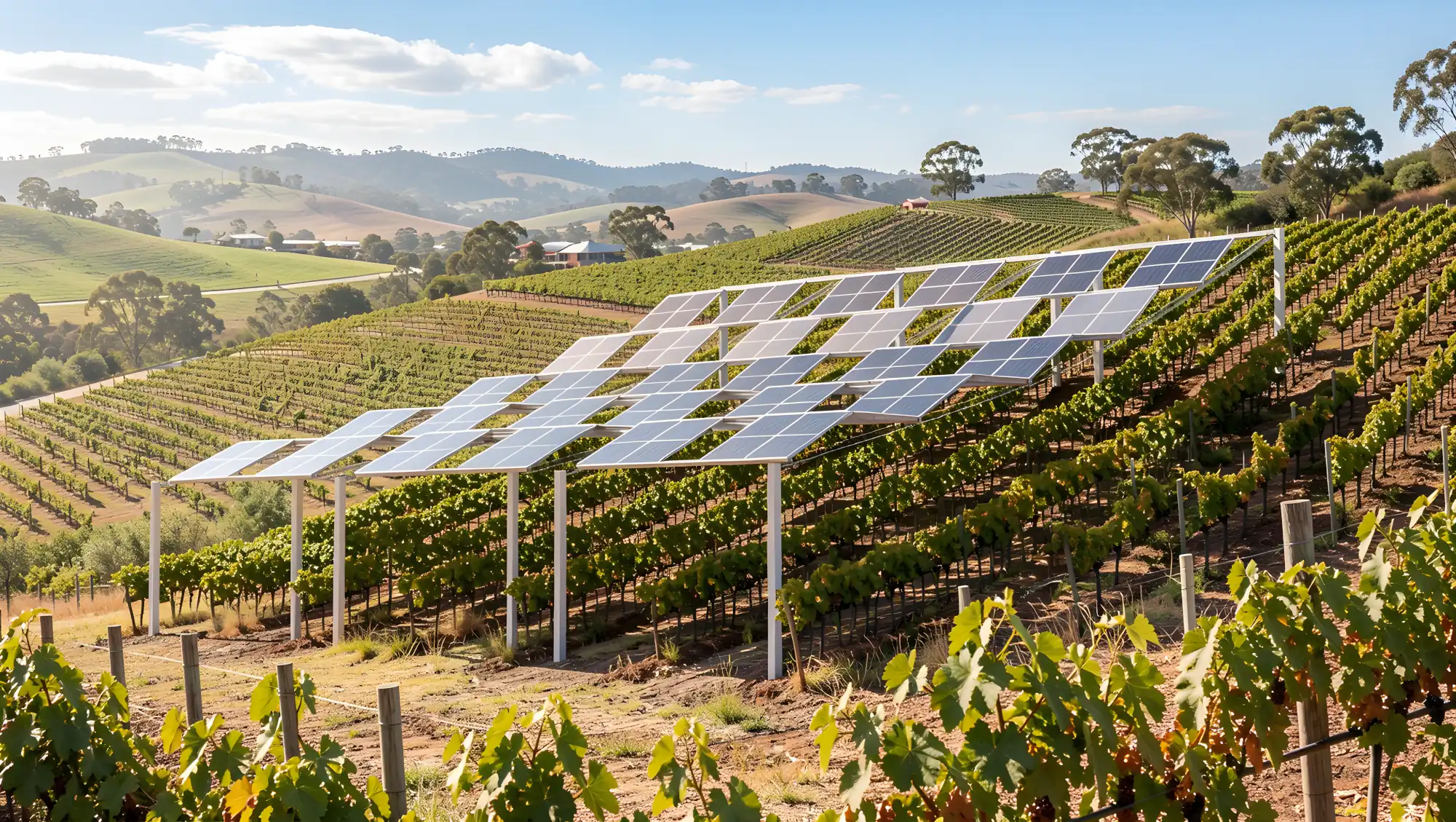
Over Crops
SOLAR WAVES lifts solar generation above productive land, allowing power, crops, grazing, shade, and water collection to share the same footprint.
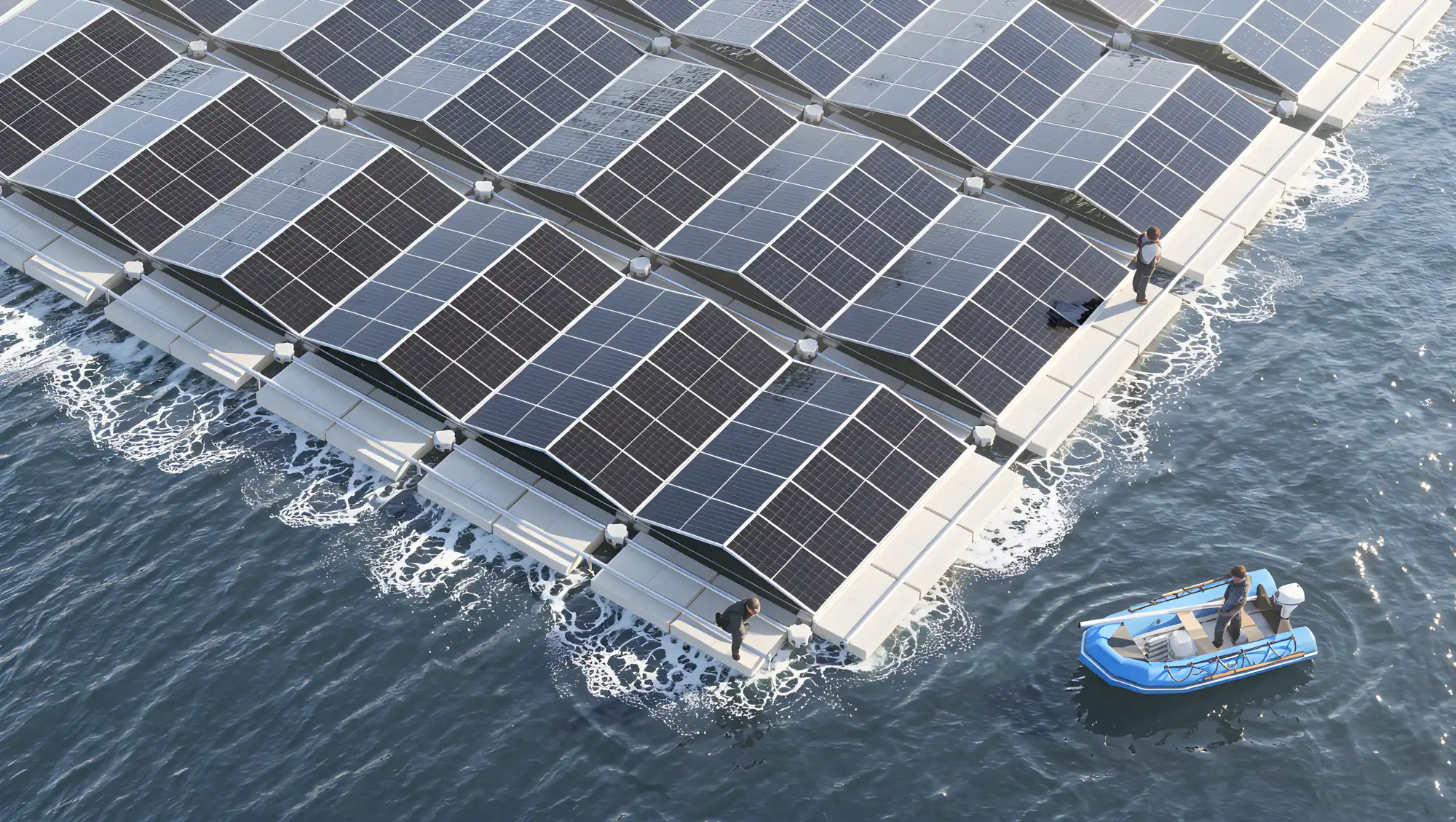
On Water
Reservoirs, ponds, and managed water bodies can become productive energy surfaces. MegaWAVE deploys on floating supports, generating power without requiring additional land.
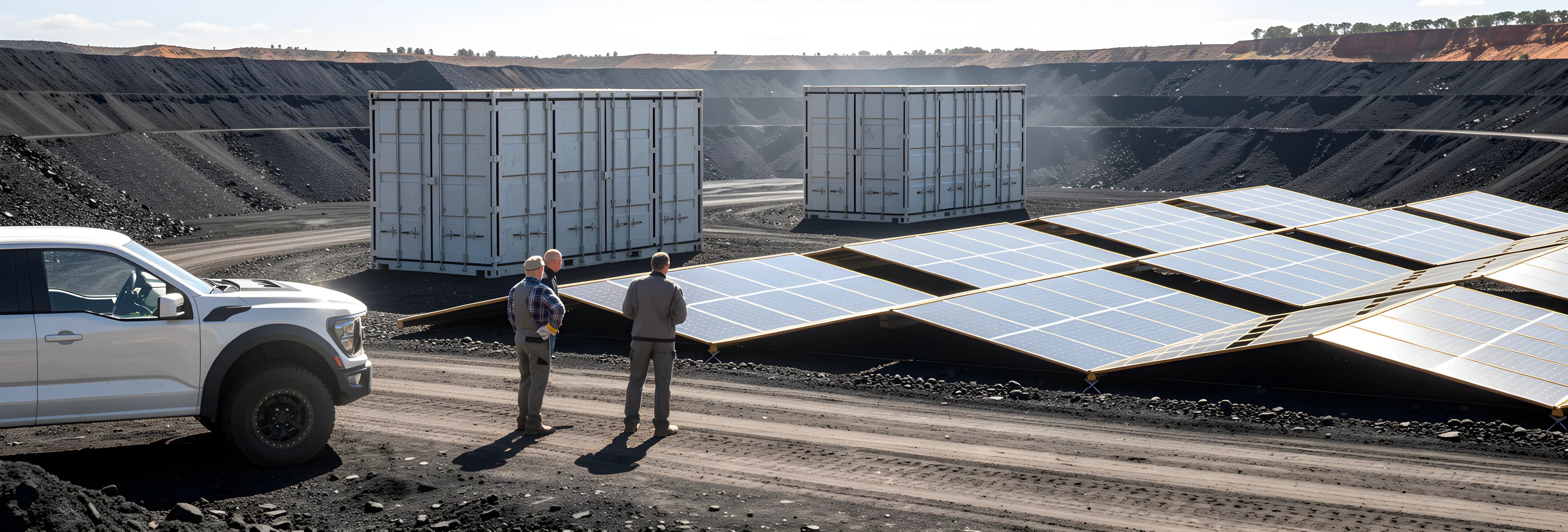
Mobile Power
SOLAR WAVES brings deployable solar power to temporary, remote, and off-grid locations. MegaWAVE arrives compact, unfolds on site, and can move when the project moves.
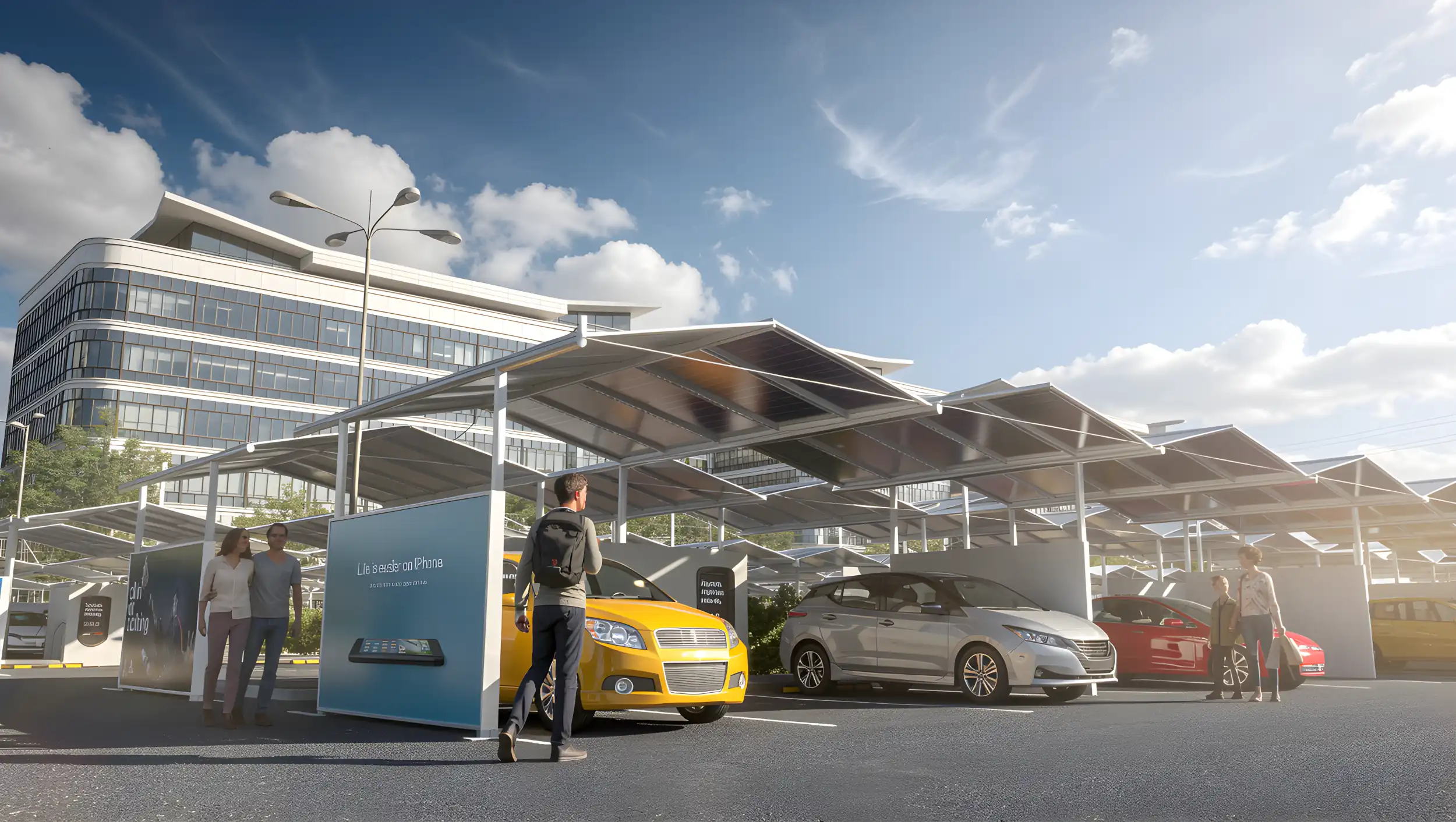
Over Car Parks
SOLAR WAVES turns parking areas into productive solar infrastructure. MegaWAVE is elevated above vehicles on a site-specific support system, adding power generation, shade, and weather protection while preserving the parking function below.
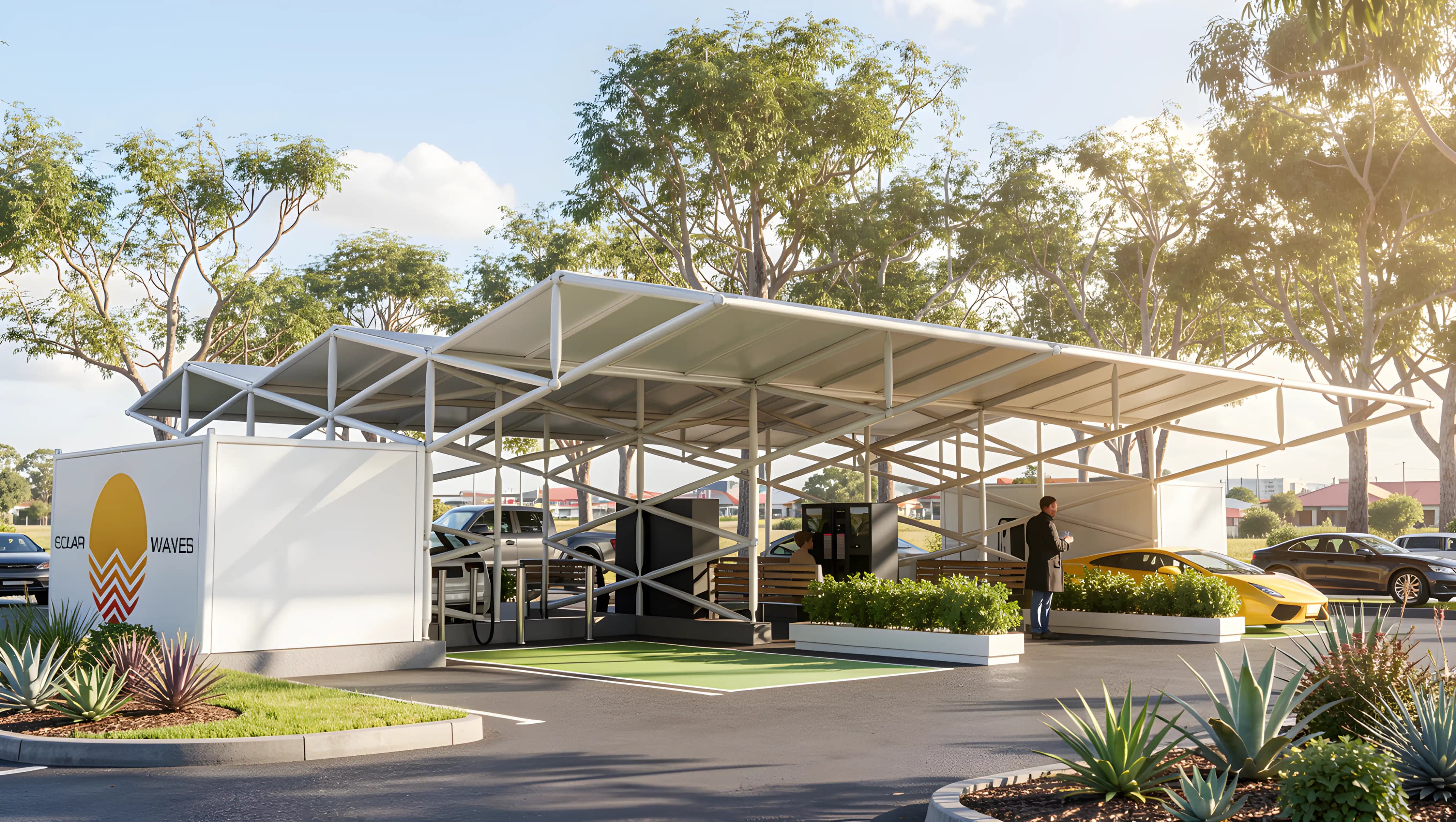
EV Charging Stations
SOLAR WAVES combines solar generation, shelter, and EV charging infrastructure in one canopy-based deployment. Vehicles charge beneath the same canopy structure that carries MegaWAVE overhead, with optional storage and electrical equipment configured for the site.
Talk to us about SOLAR WAVES.
Discuss site fit, pilot projects, deployment requirements, and support-system options with the SOLAR WAVES team.